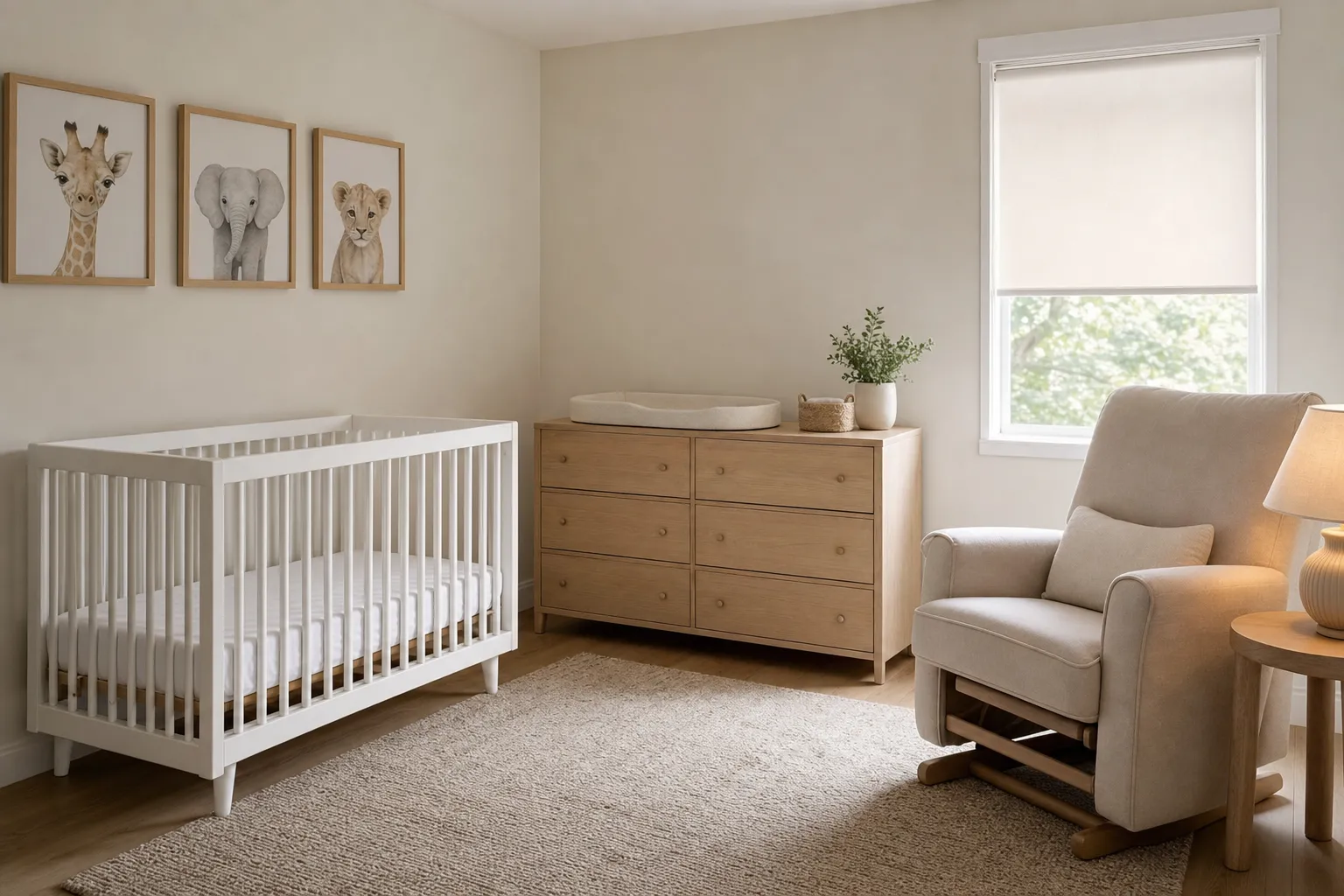
To decorate a nursery, start with safety: a crib that meets current federal standards with nothing in it but a fitted sheet, furniture anchored to the wall, and no cords within reach. Then plan the room around three zones, sleeping, changing and feeding, and decorate with a calm palette, soft light and art on the walls away from the crib. A nursery should also grow with the child, so choose pieces that will still work in a few years.
This guide covers the safety basics from the American Academy of Pediatrics and the U.S. Consumer Product Safety Commission, the design ideas that shape a good child's room, a practical layout, and two complete style guides: a classic nursery and a modern nursery.
Key takeaways
- Keep the crib bare: a firm, flat mattress and a fitted sheet only.
- Anchor dressers, bookcases and TVs to the wall.
- Choose cordless window coverings and keep all cords out of reach.
- Plan three zones: sleep, change and feed.
- Classic nurseries use soft color, wainscoting and vintage-style prints.
- Modern nurseries use warm neutrals, light wood and one bold artwork.
Safety first: what every nursery needs
Decoration never comes before safety in a nursery. The guidance below summarizes recommendations from the American Academy of Pediatrics (AAP) and the U.S. Consumer Product Safety Commission (CPSC). Always follow the current versions of their guidance and your pediatrician's advice.
Safe sleep
- Place babies on their backs to sleep, on a firm, flat surface in a crib, bassinet or play yard that meets current safety standards.
- Keep the sleep space bare: a fitted sheet only. No pillows, bumpers, blankets, positioners or stuffed toys.
- The AAP recommends that babies sleep in the parents' room, on a separate surface, ideally for at least the first six months. The nursery may be used for naps, changing and play before then.
Furniture and room safety
- Anchor dressers, bookcases and TVs to the wall. CPSC runs its Anchor It! campaign because tip-overs injure children every year.
- Place the crib away from windows, blind cords, lamps, wall hangings and furniture a child could climb from.
- Choose cordless window coverings. CPSC recommends them for homes with young children.
- Put a non-slip pad under every rug.
- Keep electrical cords behind furniture and use outlet covers.
Nursery safety check
0 of 9
The theory: what design teaches about children's rooms
Maria Montessori
The Montessori Method · 1912
The prepared environment: a room arranged at the child's scale, with order, simplicity and freedom to explore.
In your nursery: Plan the nursery to grow into a child's room: low shelves with a few toys, a mirror at floor level for tummy time, art hung low enough to be seen later, and storage a toddler can reach.
Elsie de Wolfe
The House in Good Taste · 1913
Simplicity, suitability and proportion.
In your nursery: Suitability in a nursery means washable fabrics, furniture with rounded edges, and pieces that will still suit the child in a few years, such as a convertible crib or a dresser that outlives the changing pad.
Francis D. K. Ching
Interior Design Illustrated · 1987
Scale: the relationship between the size of things and the size of people.
In your nursery: A nursery serves two scales, the adult who cares for the baby and the child who will grow up in it. The glider and dresser suit the adult; shelves, baskets and art placement should gradually suit the child.
William Morris
The Beauty of Life (lecture) · 1880
Useful or beautiful.
In your nursery: Nurseries fill up quickly with gifts. Keep what is useful or truly loved, rotate toys, and store the rest. A calm room is easier for a baby and for the parents.
Ilse Crawford
A Frame for Life · 2014
Design for the senses and for everyday rituals.
In your nursery: Night feeds are the nursery's most important ritual. A comfortable chair, a soft rug, warm dim light and a small table within reach matter more than any wall color.
Plan the nursery: three zones
1. Sleep
Place the crib on an inside wall, away from windows, cords and heating or cooling vents. Leave room to stand beside it comfortably.
2. Change
A dresser with a changing pad on top saves space and outlasts a dedicated changing table. Anchor it to the wall and keep diapers and wipes within one arm's reach, so you never step away from the baby.
3. Feed and soothe
A glider or comfortable armchair with a small side table and a lamp with a dimmer or a warm bulb. Keep the lamp cord behind the furniture.
Full-size crib footprint
About 28 x 52 in
Mattress size under the federal standard; the crib frame is a few inches larger.
Walkway
About 30 in
Clear floor between the crib, the dresser and the chair.
Changing station
Dresser 34 to 40 in high
Comfortable for most adults; anchor it to the wall.
Lighting
Warm, dimmable
A lamp or dimmer for night feeds; a night light for checks.
Art
Light, securely hung
Never heavy frames above the crib or the changing area.
Rug
With a non-slip pad
Large enough to cover the play and feeding area.
Rules of thumb for layout; for product safety, follow CPSC standards and the manufacturer's instructions.
The six layers of a well-decorated nursery
Layer 1: Color
Neutral and green nurseries are among the most searched nursery ideas this year. Soft sage, warm white, oatmeal, pale blue and blush all work. Paint well before the baby arrives and choose a low-VOC paint.
Layer 2: The crib and furniture
The crib is the focal point. Choose one that meets current federal standards, and a dresser and chair that will still be useful later. Convertible cribs can become toddler beds.
Layer 3: Lighting
A soft overhead light on a dimmer, a lamp by the chair, and a night light. Avoid bright, cool light for night feeds.
Layer 4: Textiles
A washable rug with a pad, blackout curtains or cordless shades, and a soft throw for the chair. Keep all textiles out of the crib.
Layer 5: Wall decor
Framed prints, a mural or removable wallpaper give the room its personality. Hang art securely, keep heavy frames away from the crib and changing area, and choose lightweight frames with acrylic instead of glass if you want art on the crib wall.
Layer 6: Storage
Baskets, a low bookcase anchored to the wall and closet organizers keep the room calm. Store by size and season, since babies outgrow clothes quickly.
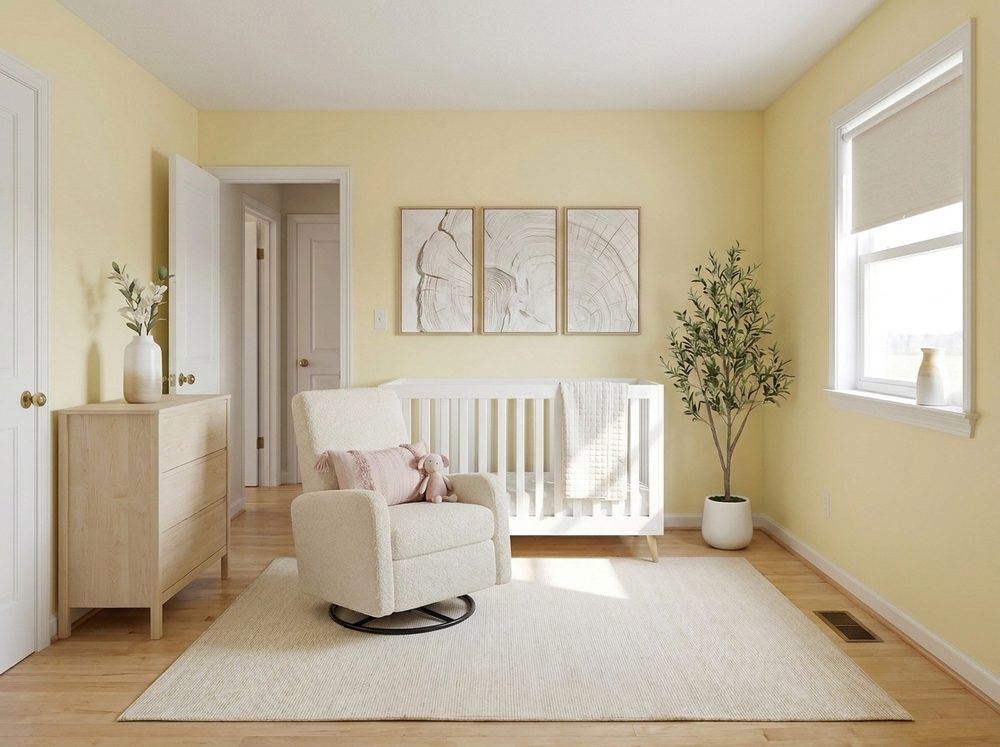 After
After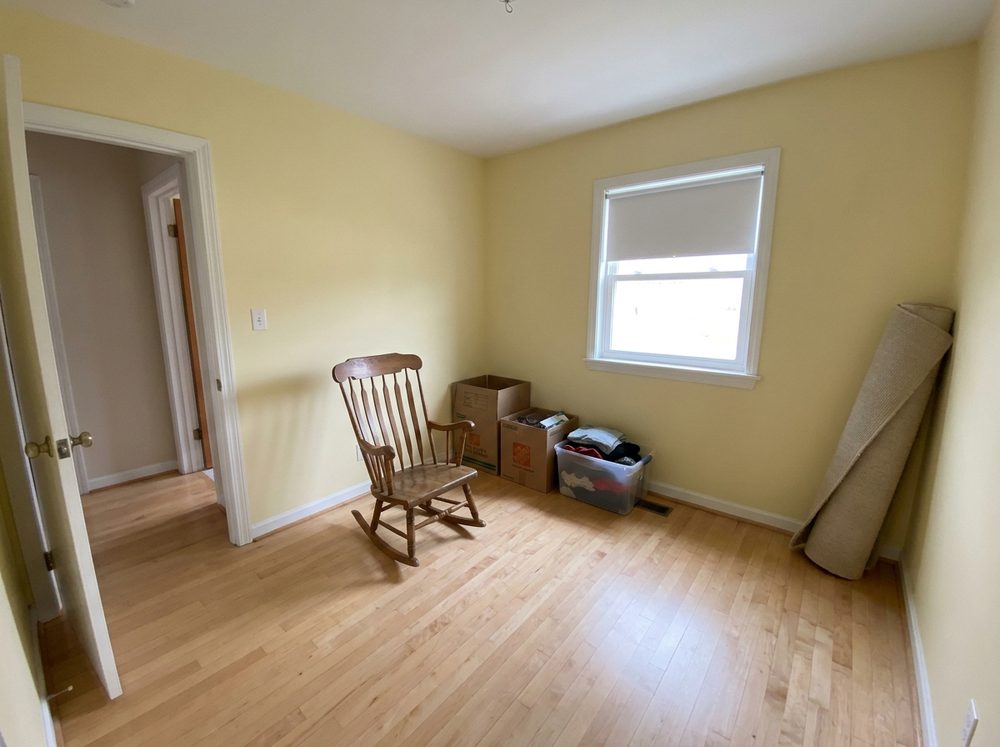
How to decorate a classic nursery
A classic nursery feels gentle and timeless: soft color, traditional furniture and art that recalls the storybooks of earlier generations.
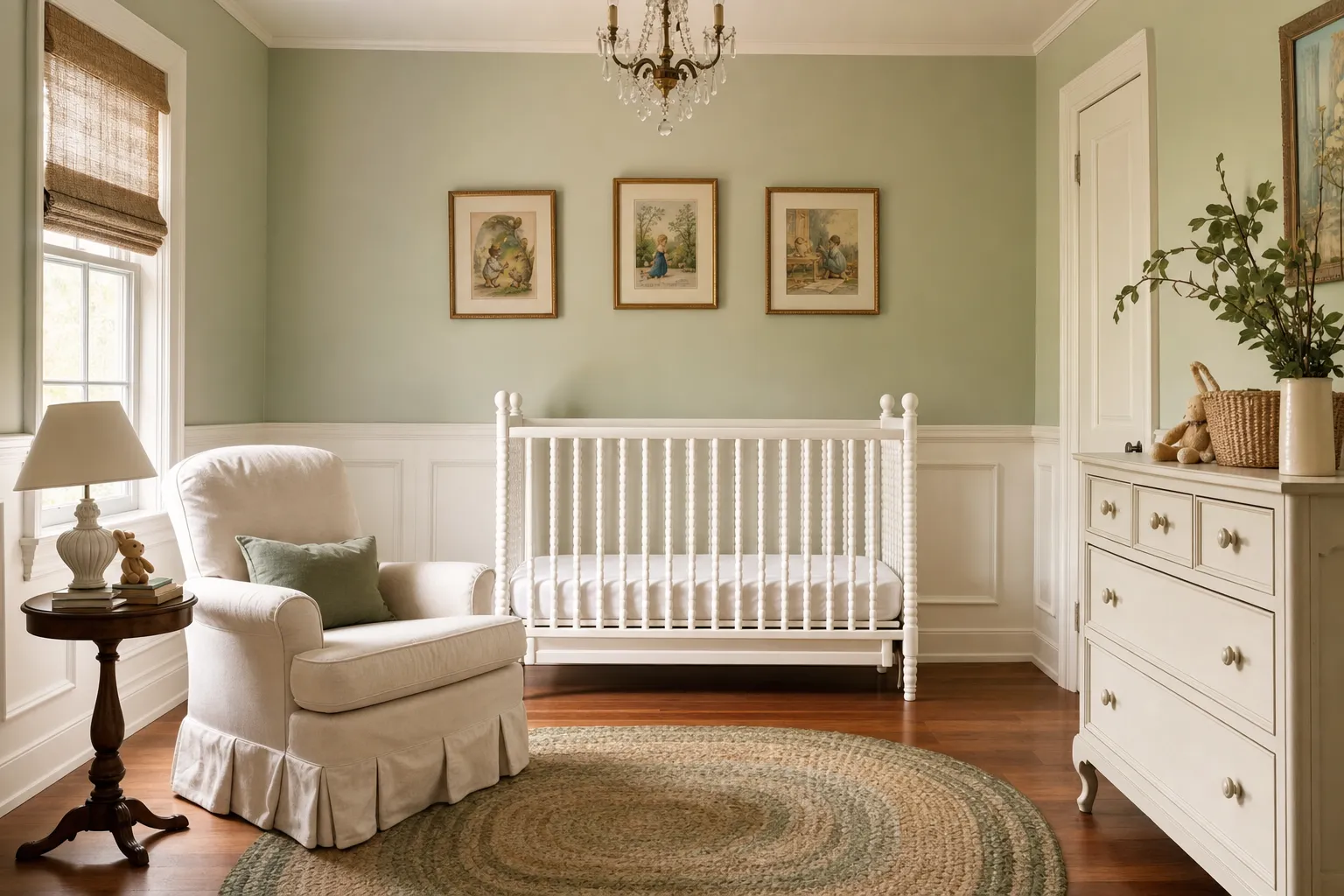
The principles of classic style
- Soft classic color. Sage, pale blue, blush or buttercream, often with white wainscoting.
- Traditional furniture. A spindle or turned-wood crib, a painted dresser, a skirted glider.
- Gentle pattern. Small florals, gingham or stripes on the chair, curtains or wallpaper.
- Storybook art. Framed vintage illustrations or botanical prints.
What to buy
- A spindle or traditional crib that meets current standards.
- A painted dresser, anchored, with a changing pad.
- A skirted or wingback glider.
- Framed vintage storybook prints in lightweight frames.
- A braided or soft patterned rug with a pad.
- Cordless Roman or pleated shades.
Checklist: classic nursery
0 of 6
How to decorate a modern nursery
A modern nursery is calm, light and uncluttered, with warm neutrals, light wood and one or two bold pieces. It adapts easily as the child grows.
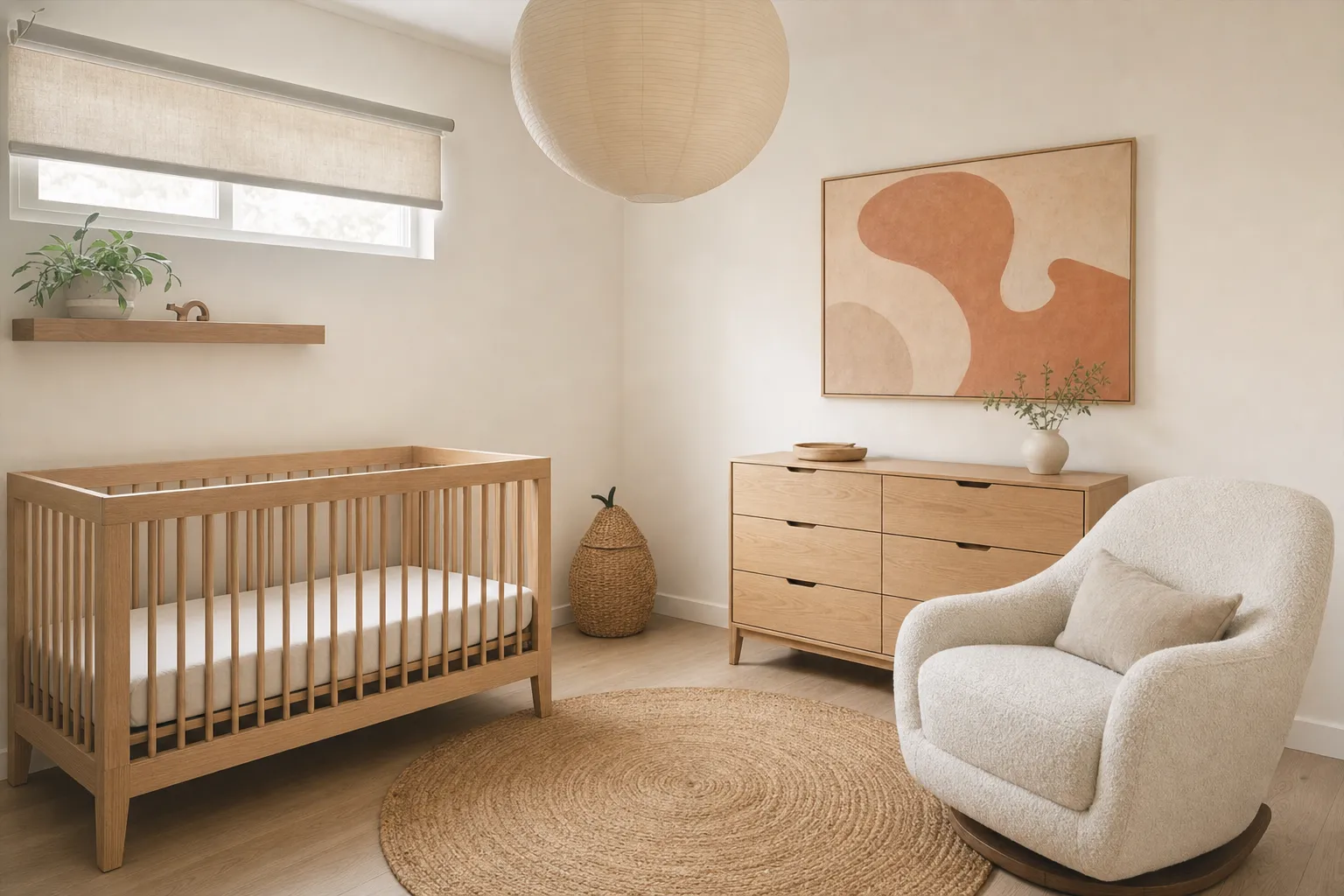
The principles of modern style
- Warm neutrals. Warm white, oatmeal, clay or sage.
- Light wood and simple lines. A minimalist crib and a low dresser.
- One statement. A large abstract artwork, a mural wall or a sculptural light.
- Texture over pattern. Boucle, linen, jute and wool.
What to buy
- A minimalist crib in light oak or white that meets current standards.
- A low, anchored dresser with clean fronts.
- A sculptural boucle glider.
- One large artwork in a lightweight frame, hung away from the crib.
- A paper pendant or simple dimmable ceiling light.
- A round jute or wool rug with a pad, and a cordless linen shade.
Checklist: modern nursery
0 of 6
Classic vs. modern nursery: a quick comparison
The classic signature
- Soft classic colors and wainscoting
- Spindle or turned-wood crib
- Skirted glider, painted dresser
- Framed vintage storybook prints
- Braided rug and Roman shades
Illustration
The modern signature
- Warm white walls, light wood
- Minimal crib with clean lines
- Sculptural glider in boucle
- One large abstract artwork
- Paper pendant, round jute rug
Illustration
| Classic (traditional) | Modern | |
|---|---|---|
| Walls | Soft color, wainscoting, small patterns | Warm white or one muted color |
| Crib | Spindle or turned wood | Minimalist, light wood |
| Chair | Skirted or wingback glider | Sculptural boucle glider |
| Art | Framed storybook prints | One large abstract artwork |
| Rug | Braided or soft pattern | Round jute or textured wool |
| Grows into | A classic child's room | A calm, flexible kid's room |
Common nursery decorating mistakes
- Soft items in the crib. Keep it bare for sleep, whatever the photos show.
- Furniture not anchored. Dressers and bookcases must be secured to the wall.
- Corded blinds. Replace them with cordless coverings.
- Heavy art above the crib. Keep it away from the sleep and changing areas.
- Buying for the first months only. Choose pieces that will still work in a few years.
- No comfortable chair. Night feeds need a good seat, a side table and soft light.
Frequently asked questions
What do I really need in a nursery?
A crib, bassinet or play yard that meets current safety standards, a firm mattress with a fitted sheet, a place to change the baby, storage for clothes, a comfortable chair and soft lighting. Everything else is optional.
Where should the crib go?
On an inside wall, away from windows, blind cords, heating or cooling vents, lamps and wall hangings, with space to stand beside it.
What colors are best for a nursery?
Soft, calm colors such as sage, warm white, oatmeal, pale blue and blush are the most popular. Neutral and green nurseries are among the most searched nursery ideas this year.
How do I decorate a small nursery?
Use a dresser as the changing station, a mini crib if needed, wall shelves for storage, and a light palette. Keep the crib away from the window and leave a clear path.
Can I hang art above the crib?
It is safest to keep art away from the crib. If you want something on that wall, choose lightweight, securely fixed pieces with acrylic instead of glass, hung well out of reach.
When should I set up the nursery?
Many parents aim to finish a few weeks before the due date, which leaves time for paint to cure and for furniture to be assembled and anchored.
See your own nursery designed
Upload a photo of the room, choose a style, and the Lilita's Studio system shows you your actual room as a nursery in a classic, modern or other style, with a shopping list of real products. Check every product against current safety standards before buying.
- Your walls, windows and doors stay where they are.
- Furniture, lighting, rug and wall decor chosen to work together.
- Every piece in one list, with store, price and link.
$49.99 for three rooms · one-time · no subscription
Real rooms and style guides
Sources and further reading
- Moon, Rachel Y., Rebecca F. Carlin, Ivan Hand, and the Task Force on Sudden Infant Death Syndrome. "Sleep-Related Infant Deaths: Updated 2022 Recommendations for Reducing Infant Deaths in the Sleep Environment." Pediatrics 150, no. 1 (2022). American Academy of Pediatrics.
- U.S. Consumer Product Safety Commission. Anchor It! furniture and TV tip-over prevention campaign. cpsc.gov.
- U.S. Consumer Product Safety Commission. Window covering cord safety guidance. cpsc.gov.
- U.S. Consumer Product Safety Commission. Safety Standard for Full-Size Baby Cribs, 16 CFR Part 1220.
- Montessori, Maria. The Montessori Method. New York: Frederick A. Stokes, 1912.
- De Wolfe, Elsie. The House in Good Taste. New York: The Century Co., 1913.
- Ching, Francis D. K., and Corky Binggeli. Interior Design Illustrated. Hoboken: Wiley (first edition 1987).
- Morris, William. "The Beauty of Life," lecture, 1880. Published in Hopes and Fears for Art, 1882.
- Crawford, Ilse. A Frame for Life: The Designs of StudioIlse. New York: Rizzoli, 2014.
Illustrations on this page are for inspiration and are not photos of customer rooms. Photos marked Real room are customer rooms rendered by the Lilita's Studio system.